

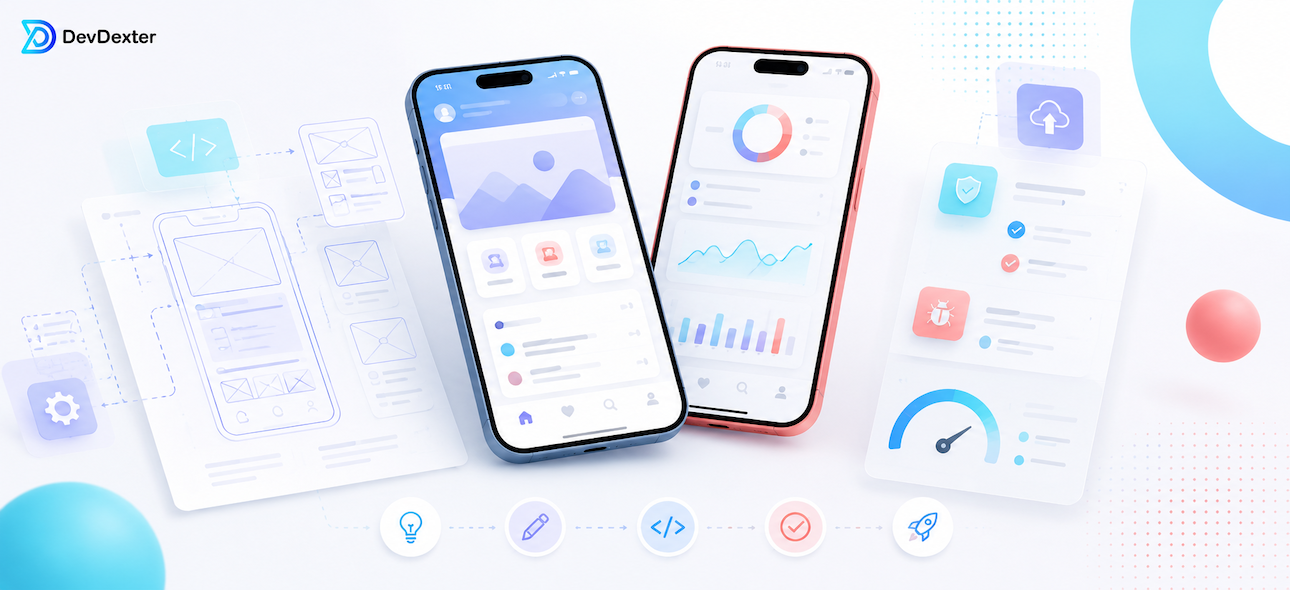
A business mobile app should be more than a polished interface on a phone. In 2026, users expect mobile apps to feel fast, useful, secure, and directly connected to the service they are using. For companies, the app should also support real operations: customer requests, bookings, payments, staff tasks, notifications, reporting, and service delivery. The best app projects start with a clear business goal and a clear user journey. Without that foundation, an app can look modern but still fail to create value.
Start with the business goal
Before choosing features, the team should define what the app must improve. Is it supposed to increase customer engagement, reduce support calls, simplify booking, help employees work in the field, or give managers faster access to data? The answer affects every technical and design decision. A customer-facing app, for example, needs simple onboarding, clear navigation, and strong support flows. A staff app may need offline access, permissions, task management, and fast data entry.
A good discovery phase should identify target users, main actions, user permissions, data fields, integrations, notifications, and reporting needs. This prevents the project from becoming a collection of disconnected features. It also helps the business decide what belongs in the first version and what can wait until users have tested the core workflow.
Design the user journey before the screens
UI design should begin with flow, not decoration. The team should map what the user does from opening the app to completing the main action. Every unnecessary step creates friction. Every unclear message increases support pressure. Strong mobile UX uses short forms, clear buttons, readable typography, fast loading, helpful feedback, and simple navigation.
For business apps, the admin side is just as important as the mobile screen. The company needs a way to manage users, content, requests, orders, bookings, notifications, reports, and support actions. If the mobile app is beautiful but the admin panel is weak, the operation behind the app becomes difficult to manage.
Build a reliable backend and API
Most useful apps depend on a backend system. The backend stores data, manages accounts, handles permissions, sends notifications, connects to payment gateways, and provides APIs for the mobile app. A clean API helps the app remain stable as the business grows. It also makes it easier to connect future web portals, dashboards, or third-party systems.
Security should be included from the beginning. Authentication, authorization, data validation, secure API calls, logging, error handling, and backups are essential for any app that stores customer or business data. If payments, documents, or private records are involved, the security plan must be even stronger.
Performance, testing, and analytics
Users quickly lose patience with slow apps. Performance should be tested on real devices and real network conditions. Images, API responses, caching, loading states, and background tasks all affect the experience. Testing should cover different screen sizes, form validation, error messages, login flows, payment flows, notifications, and edge cases.
Analytics should also be planned before launch. The business needs to know which screens are used, where users drop off, which features create value, and which issues need improvement. Without analytics, future decisions become guesswork. Clear event tracking can show whether users complete bookings, submit forms, open notifications, or abandon important steps.
Launch with a maintainable first version
The first version should be focused. It should solve the most important workflow, not every possible idea. After launch, the team can improve the app based on feedback, analytics, support questions, and business results. This phased approach usually creates a better product than trying to build a huge app before testing the core value.
Maintenance should also be planned. Operating system updates, app store requirements, device changes, security patches, and user feedback all create future work. A business app should be treated as a living product, not a one-time file delivered at launch.
Common mistakes to avoid
Common mistakes include building too many features too early, ignoring the admin panel, delaying security, skipping analytics, and treating maintenance as an afterthought. Another mistake is assuming that the app stores are the finish line. In reality, launch is the beginning of monitoring, bug fixes, updates, and product improvement.
How DevDexter can help
DevDexter helps businesses plan mobile app projects with the full digital system in mind: user experience, backend APIs, admin panels, integrations, dashboards, security, testing, analytics, and support. The goal is to build an app that fits the business process, not just a screen that looks good.
Frequently Asked Questions
Should a business build iOS and Android apps at the same time?
It depends on the audience, budget, and timeline. Many businesses benefit from a cross-platform approach, but the decision should be made after reviewing the app requirements.
What should be included in the first version?
The first version should include the core user journey, secure login if needed, essential data flows, admin management, analytics, and the features required to test real business value.
How important is the admin panel?
Very important. The admin panel is where the business manages data, users, requests, content, reports, and daily operations behind the app.
Planning a mobile app? Explore DevDexter services, review pricing, or contact DevDexter.
Need a custom website, app, or AI automation system?
Contact DevDexter to discuss your project and get a practical development plan.