

AI workflow automation becomes useful when it improves a real business process, not when it is added as a vague technology feature. The best starting points are repeated workflows with clear inputs, predictable decisions, measurable time savings, and a place for human review when the result matters.
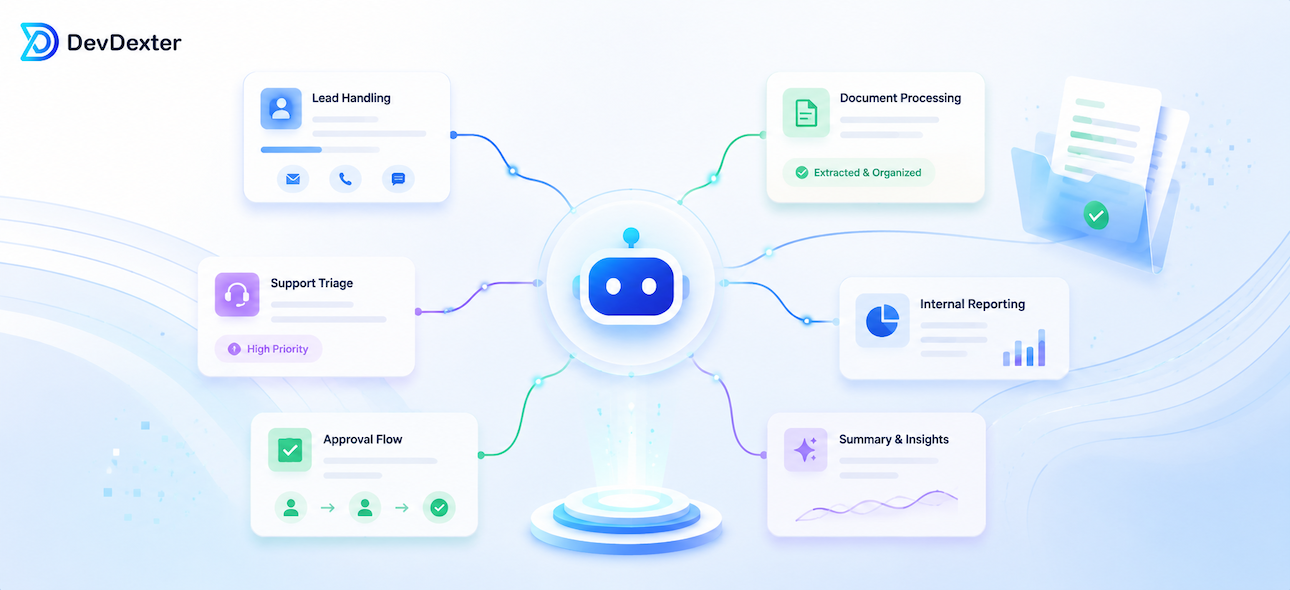
Lead handling and qualification
Incoming leads can be classified, enriched, prioritized, and routed based on source, urgency, service fit, budget signals, and required follow-up. A custom workflow can connect website forms, CRM fields, internal notifications, and reporting dashboards. For deeper implementation support, see AI automation services in UAE and AI Solutions & Automation.
Document processing and data extraction
Invoices, intake forms, contracts, and request documents often contain information that teams retype into systems. AI can extract key fields, summarize content, flag missing data, and prepare structured records for review.
Customer support triage
Support teams can use AI to sort inquiries, suggest replies, summarize previous conversations, and escalate only the cases that need judgment. This is especially useful for service companies with repeated questions and high message volume.
Internal reporting and summaries
AI can prepare recurring management summaries, explain unusual trends, consolidate meeting notes, and highlight exceptions. These outputs become stronger when paired with a web application or custom dashboard.
Approval and follow-up automation
AI can draft reminders, summarize cases for approvers, and trigger workflow steps after defined conditions are met. Human approval should stay in the loop for sensitive actions.
How to evaluate a good automation candidate
Look for repeatability, available data, clear ownership, low ambiguity, measurable time savings, and an agreed point where a person reviews the output. If the workflow needs custom logic, a custom application may be the right foundation.
Frequently Asked Questions
What is the easiest business process to automate first with AI?
Start with repetitive, text-heavy work that already follows a stable pattern, such as inquiry triage, document extraction, or recurring internal summaries.
Does AI automation replace staff?
Usually the better goal is removing repetitive handling so staff can focus on review, decisions, and customer work that needs judgment.
How do businesses measure ROI from AI automation?
Use time saved, turnaround speed, error reduction, response consistency, and workflow capacity as the first ROI markers.
Ready to explore automation? Request a Custom Project or read about AI development cost in the GCC and AI reducing manual work in service companies.
Need a custom website, app, or AI automation system?
Contact DevDexter to discuss your project and get a practical development plan.