

AI chatbot development for customer support can help businesses answer common questions faster, reduce repetitive work for support teams, and guide customers toward the right next step. A useful chatbot is not just a chat window. It needs accurate knowledge, clear conversation flows, safe escalation, and regular improvement.
What an AI support chatbot can do
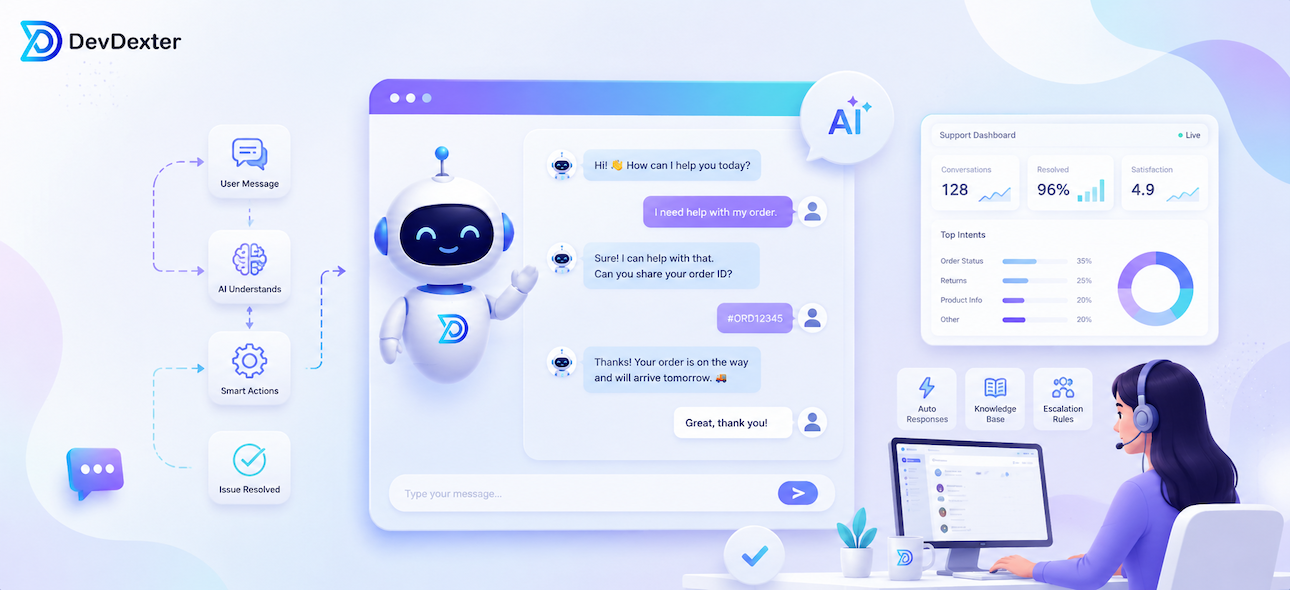
A chatbot can answer common service questions, explain requirements, collect basic information, qualify leads, create support tickets, check order or request status, and guide users to the correct form or page. It can also help staff by preparing draft replies or summarizing long customer conversations.
The best chatbot projects start with real support questions. Instead of guessing what users may ask, the business should review emails, tickets, chat logs, and FAQ content to identify repeated patterns.
Human handoff is essential
AI chatbots should not pretend to solve everything. When a question is sensitive, unclear, emotional, financial, legal, or high priority, the chatbot should hand the conversation to a human team or create a clear ticket.
A good handoff includes conversation history, customer details, detected intent, and any information already collected. This prevents customers from repeating themselves and helps staff respond faster.
Knowledge base and tone
A chatbot is only as strong as its knowledge base. Service descriptions, policies, pricing notes, process steps, and common answers should be accurate and organized. If the source content is weak, the chatbot will give weak answers.
Tone also matters. A support chatbot should sound helpful and clear, not robotic or overly promotional. It should explain what it knows, ask simple follow-up questions, and avoid making promises the business cannot support.
Integration with support tools
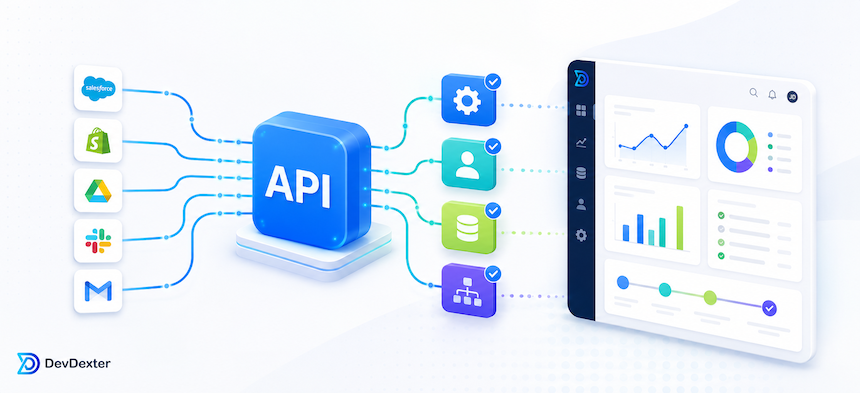
For stronger results, a chatbot can connect with CRM, helpdesk software, email systems, order databases, dashboards, or internal APIs. This allows it to create tickets, update records, show staff context, and support workflow automation.
Analytics should track what users ask, where conversations fail, which questions need better content, and when human handoff is required.
How DevDexter can help
DevDexter can help plan and build AI chatbots connected to real support workflows, websites, dashboards, and APIs. We focus on safe automation, useful responses, and clear human escalation.
What to prepare before starting
Before development begins, the business should prepare examples of current workflows, common customer questions, existing tools, required reports, user roles, approval steps, and any systems that need to be connected. This preparation makes the project more accurate and reduces the chance of expensive changes later.
It also helps to define the first version clearly. A focused first release can solve the main problem, collect feedback from real users, and create a stronger foundation for future improvements. Trying to include every possible feature from day one often slows the project and makes decisions harder.
Implementation roadmap
A professional implementation usually starts with discovery and planning, then moves into content or data preparation, user experience design, backend development, integrations, testing, deployment, and post-launch support. Each stage should have clear responsibilities and review points.
For business systems, testing should include real scenarios instead of only checking whether screens load. The team should test permissions, edge cases, data validation, notifications, mobile behavior, security rules, and the way users complete the main workflow.
How to measure success
Success should be measured with practical business indicators. Depending on the project, this may include fewer manual tasks, faster response time, better lead quality, fewer errors, clearer reporting, more completed forms, improved customer satisfaction, or lower support workload.
The most valuable digital systems are improved over time. After launch, real usage data can show which parts work well, which sections confuse users, and which features should be improved or removed.
Long-term maintenance and improvement
A serious business system should not be treated as a one-time file delivery. It needs updates, backups, monitoring, security checks, content changes, and small improvements based on real feedback. Planning maintenance early helps protect the original investment and keeps the system useful as the business changes.
This is also important for SEO and conversion. Search behavior changes, competitors improve, and customer expectations grow. Reviewing performance, updating important pages, improving calls to action, and cleaning technical issues can help the website or system keep producing value after launch.
Content, tracking and decision making
For any commercial page or digital system, tracking should be planned early. Form submissions, quote requests, call clicks, email clicks, chatbot interactions, and important CTA clicks can show whether the page is attracting the right users. These signals help the team make better decisions instead of guessing.
Content should also be reviewed regularly. Strong pages answer real buyer questions, explain the process clearly, reduce uncertainty, and guide visitors toward a practical next step. When content, design, development, and tracking work together, the project has a better chance of producing measurable business value.
Frequently Asked Questions
Can an AI chatbot replace a support team?
Usually no. It can reduce repetitive questions and help staff respond faster, but human review is still important for sensitive or complex issues.
What content is needed before building a chatbot?
You need service details, FAQs, policies, common customer questions, escalation rules, and examples of real support conversations.
Can a chatbot connect to a CRM or helpdesk?
Yes. A chatbot can create tickets, update records, and pass conversation details to support tools through APIs.
Need help planning a reliable digital system? Explore our services, review pricing, or contact DevDexter to discuss your project.
Need a custom website, app, or AI automation system?
Contact DevDexter to discuss your project and get a practical development plan.